


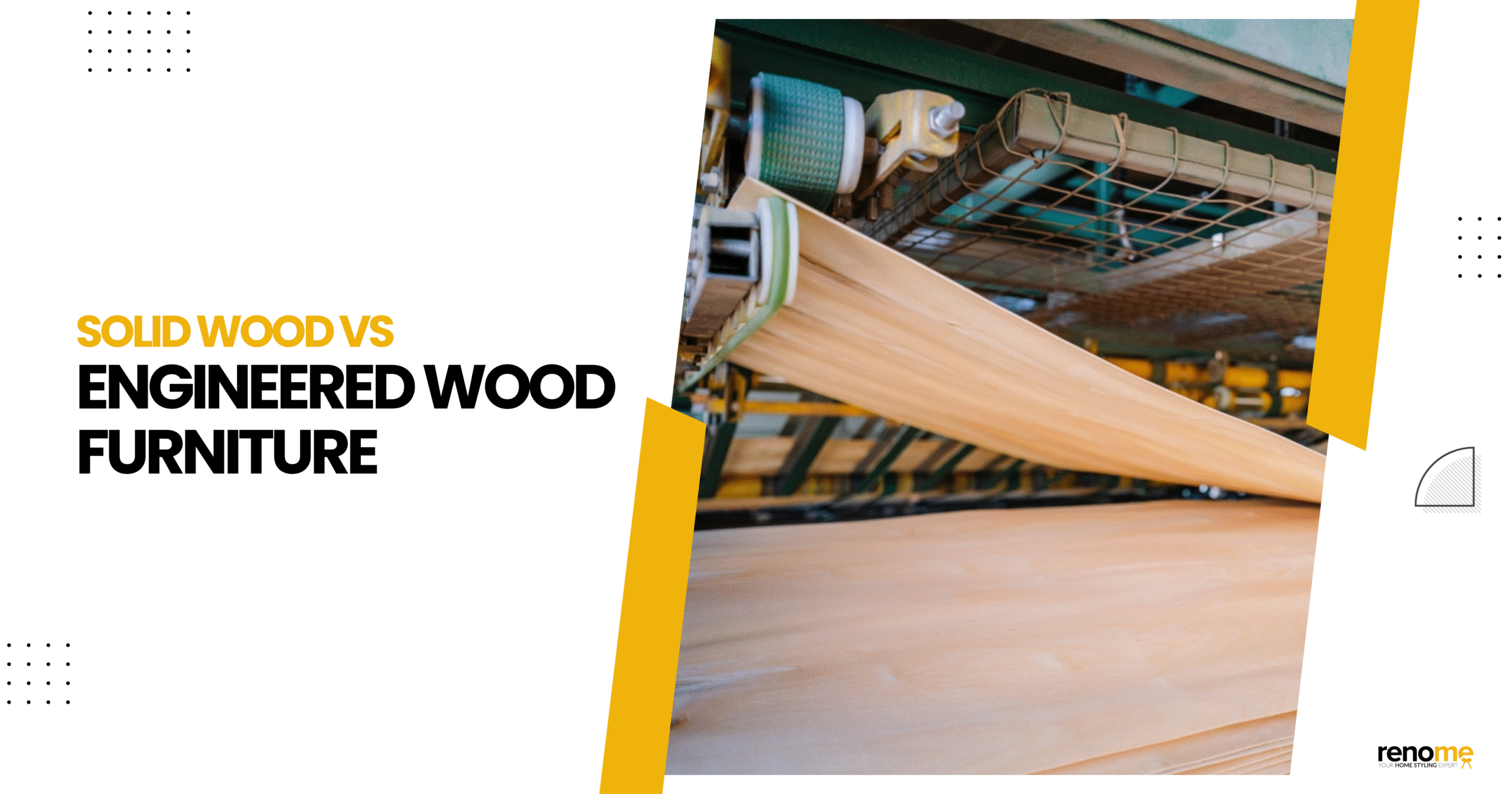
If you’re shopping for furniture in Pakistan, you’ll keep hearing two terms: solid wood and engineered wood (MDF, plywood, chipboard/particle board, veneer boards). The “best” choice isn’t universal; it depends on where the furniture will live (humidity/heat), how it will be used, and how well it’s made.
Pakistan’s furniture market has moved heavily toward engineered boards for modern designs because they’re more cost-accessible, while traditional/classic pieces still rely on solid woods like walnut/rosewood (sheesham) and others.
Below is a practical, non-hyped comparison of Solid Wood vs Engineered Wood Furniture with real numbers, what matters in Pakistani conditions, and what to check before buying.
Quick definitions
1. What is Solid Wood?
Furniture made primarily from natural timber (single-piece or joined boards). Examples in Pakistan: sheesham (shisham), walnut, oak, deodar, etc. (Availability varies by city and price bracket.)
2. What is Engineered Wood?
Panels are made by combining wood fibers/particles/veneers with binders, then pressed into sheets. Common types:
- MDF: wood fibers + resin, pressed into a dense panel. Typical MDF density is ~600–800 kg/m³.
- Particle board (chipboard): wood particles + resin; generally cheaper, weaker screw-holding than MDF/plywood.
- Plywood: thin wood layers (plies) glued cross-grain for strength.
- Veneer boards: a thin real-wood layer on top of MDF/plywood for a “wood look.”
Pakistan also produces engineered wood at competitive prices and uses it widely in modern furniture.
If you are someone looking for both engineered wood and solid wood furniture, Renome is your go-to option. Visit our store or choose the furniture you like from our online store.Solid wood vs engineered wood furniture(what you’ll actually notice)
| Factor | Solid Wood | Engineered Wood (MDF / Plywood / Chipboard) |
| Strength & impact resistance | High (depends on species and joinery) | Plywood: high; MDF: medium; Chipboard: low–medium |
| Warping with humidity/heat | Can warp/crack if not seasoned & finished | Plywood is stable; MDF swells if water gets in; chipboard swells fastest |
| Termites | Some woods resist better; many still need treatment | Panels can still get termite damage; edges and interiors need protection |
| Screw holding | Excellent | Plywood good; MDF okay; chipboard weakest (strips easily) |
| Repairability | Best (can sand, refinish, re-joint) | Limited (MDF/chipboard can’t be refinished like real wood) |
| Finish quality | Natural grain; premium look | MDF gives smooth paint finish; veneer looks real if done well |
| Cost in Pakistan | Usually higher upfront | Usually lower upfront; plywood kitchen-grade can be mid/high |
| Best use | Beds, dining, heirloom pieces, high-load frames | Wardrobes, cabinets, TV units, modular, paint-finish furniture |
Pakistan climate reality: humidity is a big deal
In many Pakistani cities, humidity swings across the year. For example, Islamabad’s average relative humidity goes as low as ~42% (May) and up to ~76% (August). Coastal areas like Karachi are often more persistently humid.
Why it matters:
- Solid wood expands/contracts with seasonal moisture changes. If it’s not properly seasoned/kiln-dried and sealed, it can warp, crack, or develop joint gaps.
- MDF and chipboard don’t “move” like solid wood, but they can swell permanently if water enters, especially from the edges.
Practical takeaway: In kitchens, baths, and damp ground-floor rooms, material choice + edge sealing + hardware quality matters more than the marketing label.
“Solid wood is always better”: not true in cabinetry
For wardrobes, kitchen cabinets, and TV units, engineered boards often win because they are flatter and more dimensionally stable for large surfaces.
A Pakistan-focused industry report notes modern furniture commonly uses engineered wood such as veneer/MDF, chipboard, and laminations, while classical furniture uses solid woods like walnut/rosewood. That shift happened for cost and production reasons, but also because panel-based construction suits modern layouts.
Best practice for cabinets in Pakistan
- Plywood (good grade) for kitchen carcass and wet zones
- MDF for paint-finish shutters/doors (ONLY if edges are sealed and water exposure is controlled)
- Avoid basic chipboard near sinks, bathrooms, or damp walls unless it’s properly laminated and edge-banded (and even then, risk remains)
Strength with real numbers (example: sheesham)
Many buyers ask: “Is sheesham actually strong?”
One reference dataset lists sheesham (sissoo) at about 770 kg/m³ density and Janka hardness ~1,660 lbf, a strong hardwood by furniture standards.
What that means in plain terms:
- It handles knocks well (dining chairs, bed frames).
- It holds screws/joints well.
- It can last decades if seasoned and finished properly.
But even strong hardwood can warp if it’s rushed into production with high moisture content.
Moisture content: the hidden quality marker
A lot of “solid wood problems” in Pakistan come from wood not being dried to furniture-grade moisture content.
Common guidance for furniture-grade wood is around 8–12% moisture content (varies by region and indoor conditions).
What to do as a buyer (simple checks)
- Ask: Was the wood kiln-dried? (Good sellers can answer confidently.)
- Look for: end-grain cracks, twisted long pieces, or drawers that don’t glide smoothly (signs of movement).
- Prefer: seasoned frames + proper joinery (mortise/tenon, dowels) over “only screws and glue.”
Health & indoor air quality: formaldehyde, but keep it practical
Engineered boards use resins; some can release formaldehyde at higher rates if low-quality adhesives are used.
- In many EU contexts, E1 emission class is commonly used, with a limit of 0.124 mg/m³ (0.1 ppm) using EN 717-1 chamber testing.
- The US regulates composite wood under TSCA Title VI (related to CARB Phase 2).
What this means for Pakistan buyers:
You won’t always get certified paperwork locally, but you can reduce risk:
- Prefer reputable board brands and proper lamination/edge banding.
- Let new furniture off-gas: keep it in a ventilated room for a few days.
- If someone in the home has asthma/allergies, lean toward solid wood or certified low-emission boards when possible.
Also note: even natural wood can emit small natural background levels of formaldehyde. So don’t panic, just avoid cheap, unknown boards in bedrooms if you can.
Cost in Pakistan: think “total cost,” not just price tag
1. Solid wood usually costs more upfront
- Higher raw material cost
- More labor (joinery, finishing)
- Heavier shipping/handling
2. Engineered wood is often cheaper and faster
Pakistan’s modern furniture market shifted toward MDF/chipboard because traditional solid-wood styles are relatively expensive compared to MDF furniture.
But be careful: a well-built plywood kitchen can cost more than a low-end solid wood bed. Construction quality matters.
Best material choices by use-case (Pakistan homes)
| Use-case | Recommended | Avoid / Watch-outs |
| Bed frame (daily load) | Solid wood (sheesham/walnut) OR engineered + solid wood internal frame | All-chipboard frames; weak corner blocks |
| Dining table | Solid wood top OR high-quality plywood with veneer | MDF/chipboard top if you expect hot plates/water spills |
| Wardrobe / sliding doors | Plywood carcass + MDF/laminate doors | Bare MDF in humid rooms; poor edge banding |
| Kitchen cabinets | Plywood (BWR/BWP-type concepts) for carcass; MDF for shutters if sealed | Chipboard near sink; unsealed edges anywhere |
| TV console / wall panels | MDF (paint finish) or plywood + laminate | Very thin boards, weak wall-fixings |
| Kids furniture | Solid wood or certified low-emission boards | Unknown boards with strong smell |
Tip: If a cabinet door is MDF but the carcass is plywood, that’s often a good balance for Pakistan.
The quality checklist (this is what separates “good MDF” from “bad MDF”)
Regardless of material, check these:
- Edge sealing / banding
- Exposed edges = swelling risk (especially MDF/chipboard)
- Back panel thickness
- Ultra-thin backs cause racking and looseness over time
- Hardware
- Soft-close hinges, proper drawer channels, correct screw fixing
- Joinery
- Strong corner blocks, dowels, or mortise/tenon where needed
- Finish
- Even polish/paint, no rough patches, no strong chemical smell
- Warranty & after-sales
- If they won’t stand behind it, expect issues.
Common Pakistan myths (quick fixes)
Myth 1: “MDF is always bad.”
Not true. MDF is excellent for paint-finish furniture and interior panels when kept dry and sealed.
Myth 2: “Solid wood never gets termites.”
Termites can attack many types of wood. Treatment, polishing, and keeping furniture away from damp walls matter.
Myth 3: “Plywood is waterproof.”
Plywood water resistance depends on the glue and grade. In South Asia, terms like MR/BWR/BWP are used to describe moisture tolerance; the principle is that better grades use more water-resistant resins than basic interior-grade boards.
Final recommendations (what I’d do in a Pakistani home)
Now, to conclude the whole discussion of Solid Wood vs Engineered Wood Furniture, here is in short what you need to consider.
- Bedroom bed + side tables (long life): solid wood frame is worth it.
- Wardrobes: plywood carcass + laminate/veneer + properly edged.
- Kitchen: invest in plywood carcass; do MDF shutters only if sealed and away from direct water.
- Living room consoles: MDF/plywood is fine, focus on thickness, wall mounting, and hardware.
FAQs
Neither is universally better; the right choice depends on use and environment. Solid wood is stronger, longer-lasting, and repairable, making it ideal for beds and dining furniture. Engineered wood is more stable for large flat surfaces, more affordable, and better suited for wardrobes, cabinets, and modern interiors when quality boards and proper sealing are used.
The main disadvantage of engineered wood is poor resistance to moisture if not properly sealed. MDF and particle board can swell permanently when exposed to water. It also has weaker screw-holding strength than solid wood and limited repair options, meaning damaged panels usually need replacement rather than refinishing or structural repair.
No, engineered wood is not solid wood. It is made by bonding wood fibers, particles, or thin veneers with adhesives under heat and pressure. While it may contain real wood material, it does not have the natural grain continuity, structural behavior, or long-term refinishing capability of furniture made from solid timber.
The best wood for furniture depends on function. For load-bearing furniture like beds and dining tables, hardwoods such as sheesham or walnut perform best. For cabinets, wardrobes, and painted furniture, high-quality plywood or MDF offers better dimensional stability, smoother finishes, and consistent results when manufactured and sealed correctly.
Sheesham wood is better for strength, durability, and long-term value, especially for beds, dining furniture, and heirloom pieces. Engineered wood is better for cost control, modern designs, and large panels like wardrobes and kitchen cabinets. In Pakistani conditions, many homes benefit from using both materials strategically rather than choosing only one.