


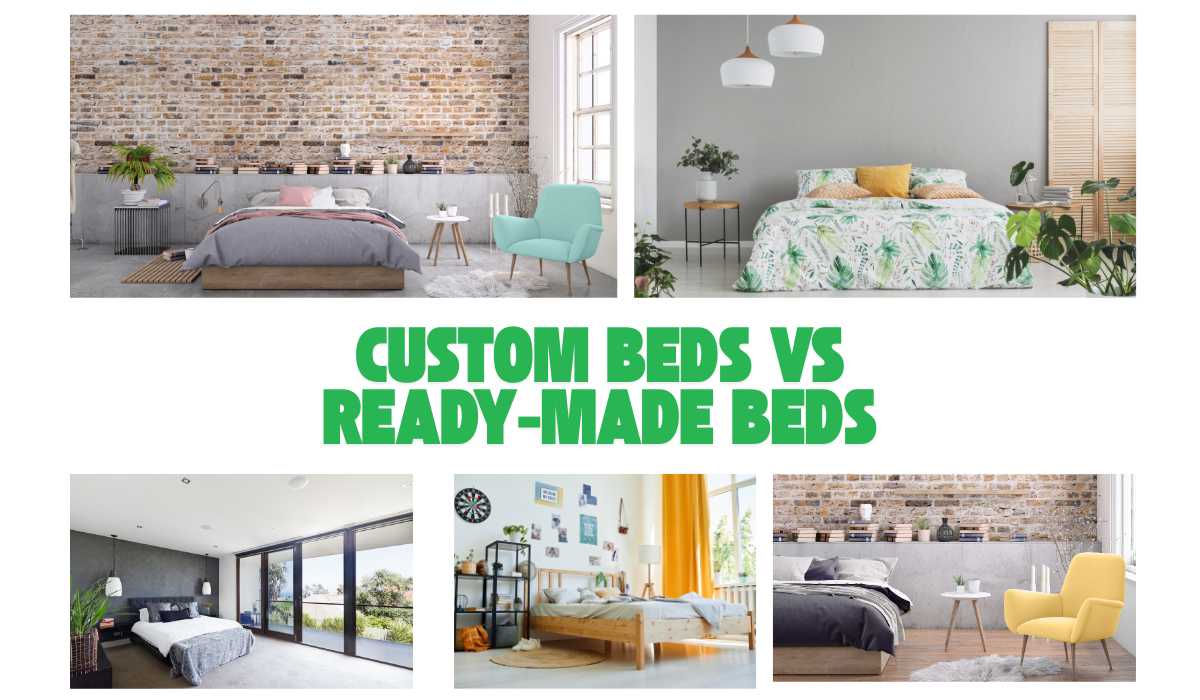
Choosing between custom beds and ready-made beds is not just about design preference. It affects how comfortably you sleep, how efficiently your room functions, how long the bed lasts, and how much flexibility you have if something goes wrong later. While both options serve the same purpose, the experience of owning and living with them can be very different.
This guide explains the real-world differences between custom beds vs ready-made beds, based on how furniture is actually manufactured, delivered, used, and maintained, not marketing language.
Understanding The Core Difference
A ready-made bed is produced in standard sizes and designs, manufactured in bulk, and kept in stock or quick-ship inventory. What you see is what you get. The design, dimensions, material thickness, and storage configuration are fixed.
A custom bed, on the other hand, is built after you confirm specifications. Size, height, headboard style, storage layout, fabric or wood finish, and even structural details can be adjusted. Production only begins once measurements and materials are finalized.
That difference alone explains most of the pros and cons.
Looking for a bed that actually fits your space and lifestyle?
Renome designs and crafts custom beds tailored to your room size, storage needs, and interior style, using durable materials suited for Pakistani homes. Explore our custom bed solutions at Renome.
Custom Beds vs Ready-Made Beds at a glance
| Aspect | Custom Bed | Ready-Made Bed |
| Availability | Built after the order | Usually in stock |
| Delivery time | 4–12 weeks on average | Same day to ~2 weeks |
| Size flexibility | Fully adjustable | Standard sizes only |
| Storage options | Fully customizable | Limited |
| Returns | Often non-returnable | Usually returnable |
| Price range | Higher upfront | Lower upfront |
| Best use | Primary bedrooms, long-term use | Guest rooms, rentals, quick setups |
Delivery Timelines: Why Waiting Matters
One of the most practical differences between custom beds and ready-made beds is time.
Custom furniture typically takes 4 to 12 weeks, depending on complexity, material availability, and workshop workload. Some designs, especially storage beds or upholstered headboards, can take longer due to drying, finishing, and quality checks.
Ready-made beds are faster by design. If the model is in stock, delivery can happen within days. Even when ordered from warehouses, most ready-made beds arrive within one to two weeks.
If you are furnishing a home with a fixed move-in date, planning a wedding setup, or preparing a rental unit, this timing difference alone often determines the choice.
Size, Accuracy, and Room Planning
Standard bed sizes sound simple, but in practice, they create confusion.
Internationally, a queen bed is 60 × 80 inches and a king bed is 76 × 80 inches. However, in many local markets, especiallyin South Asia, manufacturers interpret “queen” and “king” differently. A queen may be 60 × 78 inches or even wider, while king sizes often vary by brand.
With ready-made beds, you must adapt your room and mattress to the manufacturer’s definition of size.
With custom beds, the frame is built around your exact mattress dimensions and room constraints. This matters more than people expect, especially in bedrooms where:
- Wall-to-wall clearance is limited
- Wardrobes open close to the bed
- The circulation space needs to remain comfortable
A difference of even two inches can affect how the room feels daily.
Storage: Where Custom Beds Usually Outperform
Storage is one of the strongest arguments in favor of custom beds.
While ready-made storage beds usually offer either hydraulic lift-up storage or fixed drawer layouts, they are designed for mass appeal. Drawer direction, internal depth, and ventilation are standardized.
Custom beds allow control over:
- hydraulic depth and lifting angle
- number and placement of drawers
- clearance for flooring types
- ventilation gaps to reduce moisture buildup
In warmer or humid climates, this ventilation detail becomes important. Poor airflow under storage beds can trap moisture and odor over time, something rarely addressed in off-the-shelf designs.
Material Quality and Long-Term Durability
A bed frame is a structural product. Its lifespan depends more on materials and construction than appearance.
Custom beds give you the option to specify:
- Solid wood vs engineered wood
- Thickness of side rails and supports
- Quality of hardware used in storage systems
Well-built, solid wood bed frames can last decades with basic care and occasional tightening or refinishing. Many manufacturers who use solid hardwood confidently offer long structural warranties.
Ready-made beds vary widely. Some are excellent, using kiln-dried wood or reinforced metal frames. Others rely heavily on MDF or particleboard, which can be vulnerable to humidity, repeated load stress, and screw fatigue over time.
The key point is this: custom does not automatically mean better, but it gives you more control if you know what to ask for.
Cost: Upfront Price vs Long-Term Value
Custom beds typically cost more upfront. Industry comparisons often place custom furniture 30–50% higher than comparable ready-made options, mainly due to labor, one-off production, and material flexibility.
Ready-made beds benefit from scale. Designs are optimized, materials are standardized, and manufacturing costs are spread across large batches.
However, long-term value depends on use. A cheaper bed that needs replacement in a few years can end up costing more than a well-built custom bed that lasts a decade or longer. This matters most for primary bedrooms, where daily use is unavoidable.
Returns, Exchanges, and Risk
This is where many buyers feel the difference most sharply.
Ready-made beds usually come with clearer return or exchange policies. If sizing feels wrong or the design doesn’t suit the room, there is often a defined window to return or replace the product.
Custom beds are different. Once production starts, most workshops treat the order as a final sale. Since the bed is built to specific dimensions and finishes, it cannot easily be resold.
This makes measurement accuracy and clear communication critical when choosing custom.
Design Consistency Across The Bedroom
Another reason people choose custom beds is visual harmony.
When wardrobes, bedside tables, wall panels, and beds are designed together, proportions and finishes align more naturally. Headboard height, fabric texture, wood tone, and visual weight can be balanced across the space.
Ready-made beds can still look great, but matching them perfectly with existing furniture often requires compromise.
When Each Option Makes More Sense
Custom beds tend to work best for:
- master bedrooms
- homes with unusual layouts
- users who need specific storage solutions
- long-term residences
Ready-made beds are usually better for:
- guest rooms
- rental properties
- quick furnishing needs
- changing lifestyles or short-term use
There is no universal winner, only better alignment with your situation.
Final verdict
The debate around custom beds vs ready-made beds is not about luxury versus budget. It is about control versus convenience.
Custom beds reward careful planning with better fit, tailored storage, and design consistency, but they demand patience and clarity upfront. Ready-made beds trade flexibility for speed, predictability, and easier after-sales handling.
If this bed will support you every night for years, investing time in the decision matters more than the label attached to it.
Custom made furniture is built after an order is placed and tailored to specific size, design, and material requirements. Ready-made furniture is mass-produced in standard sizes and designs and sold as-is. The main difference lies in flexibility, fit, delivery time, and the level of personalization available to the buyer.
A custom bed is a bed frame designed and built according to specific requirements such as exact mattress size, room dimensions, storage needs, material preferences, and headboard style. Unlike standard beds, custom beds are made to fit individual spaces and usage needs, offering better space efficiency and design alignment for long-term use.
Custom made furniture refers to furniture that is produced on demand based on the buyer’s specifications rather than pre-made designs. This includes control over dimensions, materials, finishes, and functional features. It is typically chosen when standard furniture sizes or designs do not meet space, usability, or aesthetic requirements.
Custom furniture is chosen when precise fit, long-term durability, and functional requirements matter. It allows better use of available space, tailored storage solutions, and material control. While it often takes longer to produce, custom furniture offers greater alignment with lifestyle needs and interior layouts compared to standard ready-made options.